Fifa.com
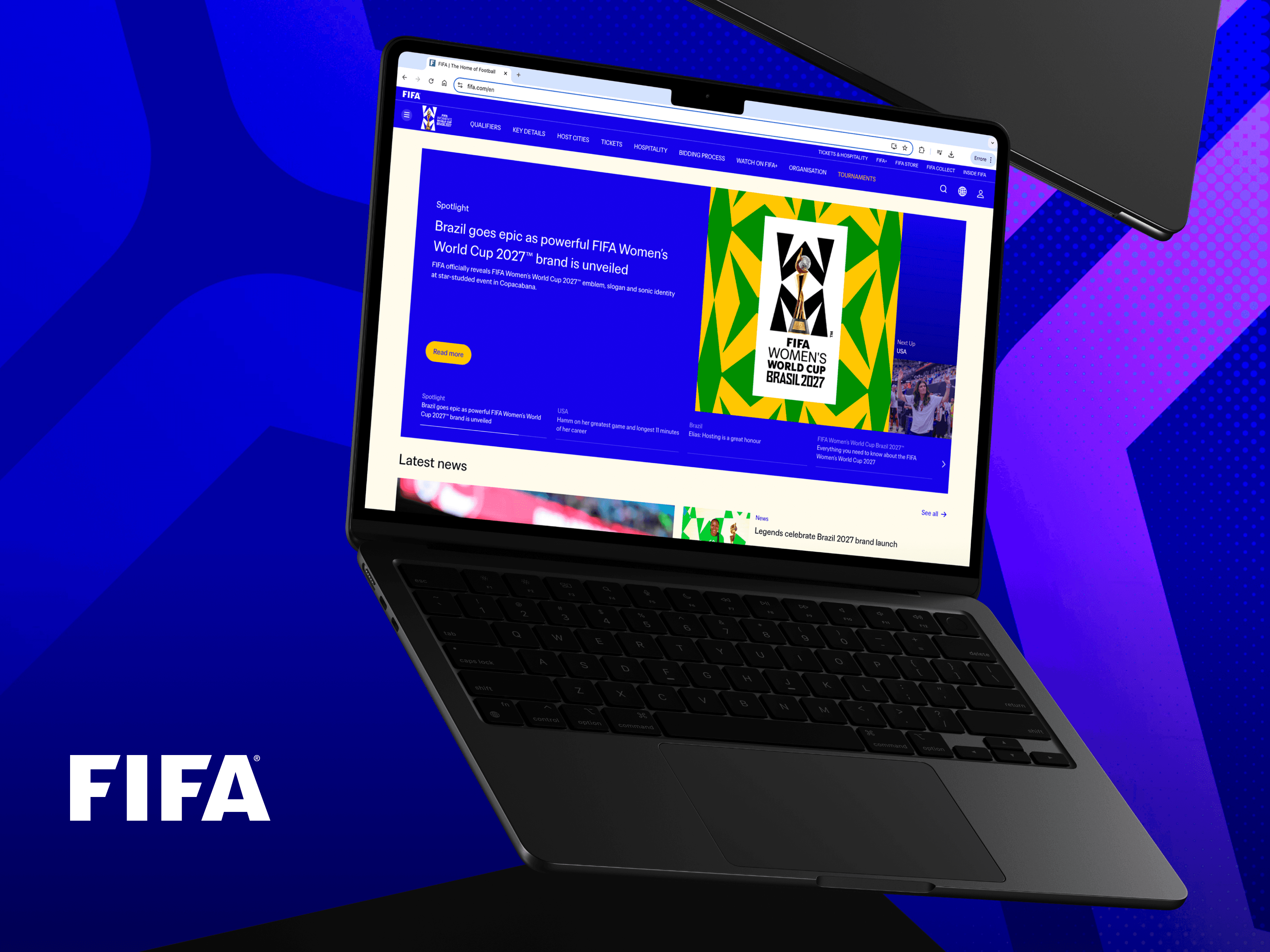
FIFA.com is a large-scale, evolving digital platform serving a global audience across multiple competitions and markets. For over a year and a half, I have contributed to the continuous evolution of the product, working on complex UX challenges, scalable UI solutions, and conceptual design for major international tournaments.
Client
Fifa.com
Year
2026
Type
UX/UI Design
EXPERIENCE VISION
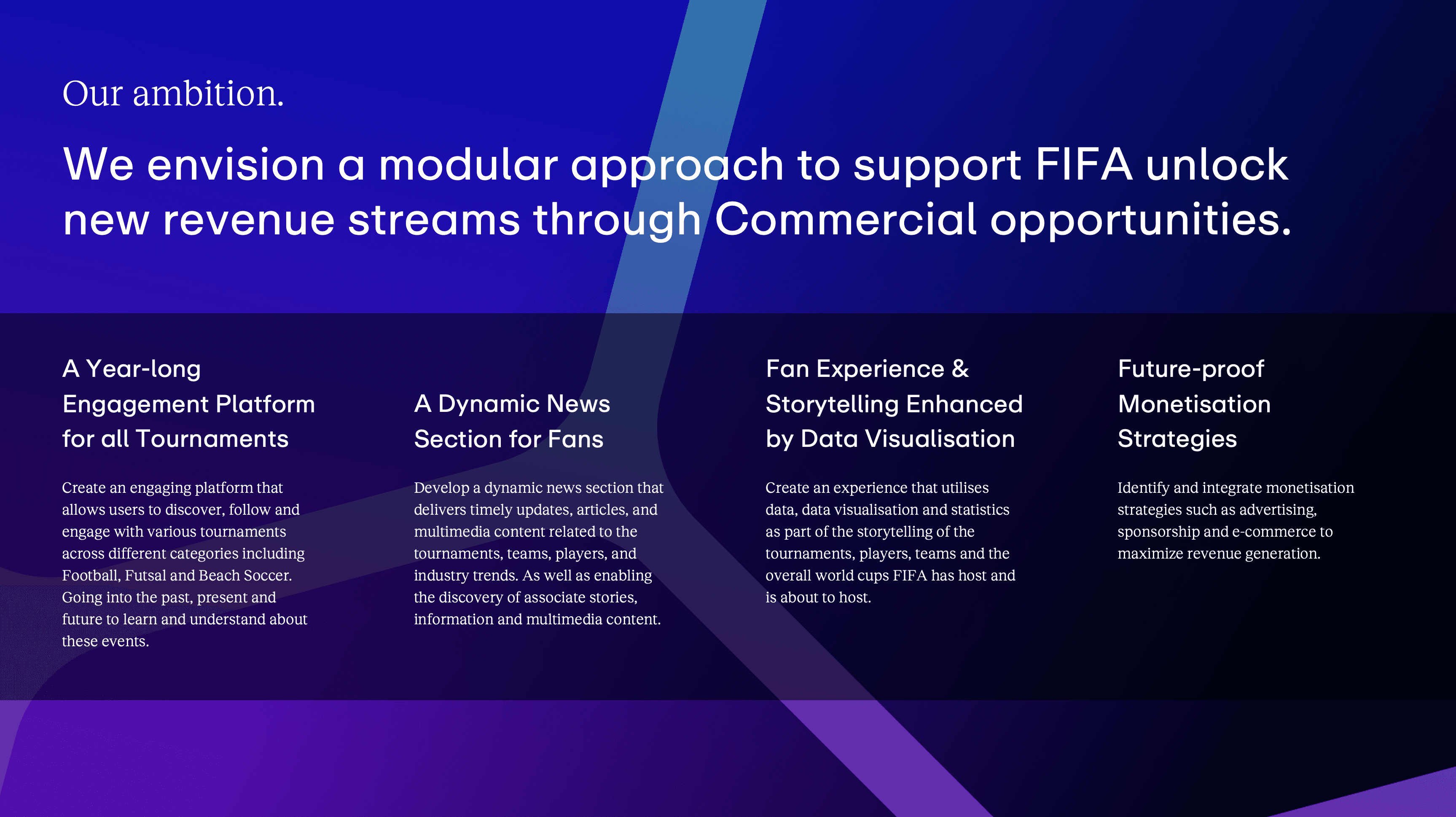
The initial concept work explored a north star experience for FIFA.com: a unified, modular platform capable of supporting year-long engagement across all tournaments, enhancing discovery, storytelling, and monetisation.
The vision focused on:
seamless discovery of tournaments through new navigation and onboarding flows
data, statistics, and insights as core elements of storytelling
dynamic, editorial-first experiences adaptable to different markets and audiences
a modular approach designed to support future commercial opportunities
This conceptual phase was designed to set direction and ambition, later adapted and scaled within real product, technical, and organisational constraints.
THE CHALLENGE
Designing for FIFA.com means operating at global scale. The platform serves millions of users across countries, languages, and cultural contexts, while supporting football, futsal, and beach soccer competitions with very different structures and needs.
The challenge is to create UX and UI solutions that remain consistent and intuitive, while handling complex data, editorial requirements, and commercial objectives. Every design decision must work across markets, edge cases, and devices, and be flexible enough to evolve over time.
DESIGN PROCESS
My work focuses on UX and UI design for a large, evolving product, combining long-term system thinking with continuous product iteration.
On the live platform, I design and evolve core components and patterns, including global navigation, tournament selectors, data tables, statistics, and editorial modules. These elements are built to scale through a modular design system, supporting multiple languages, competitions, and layouts.
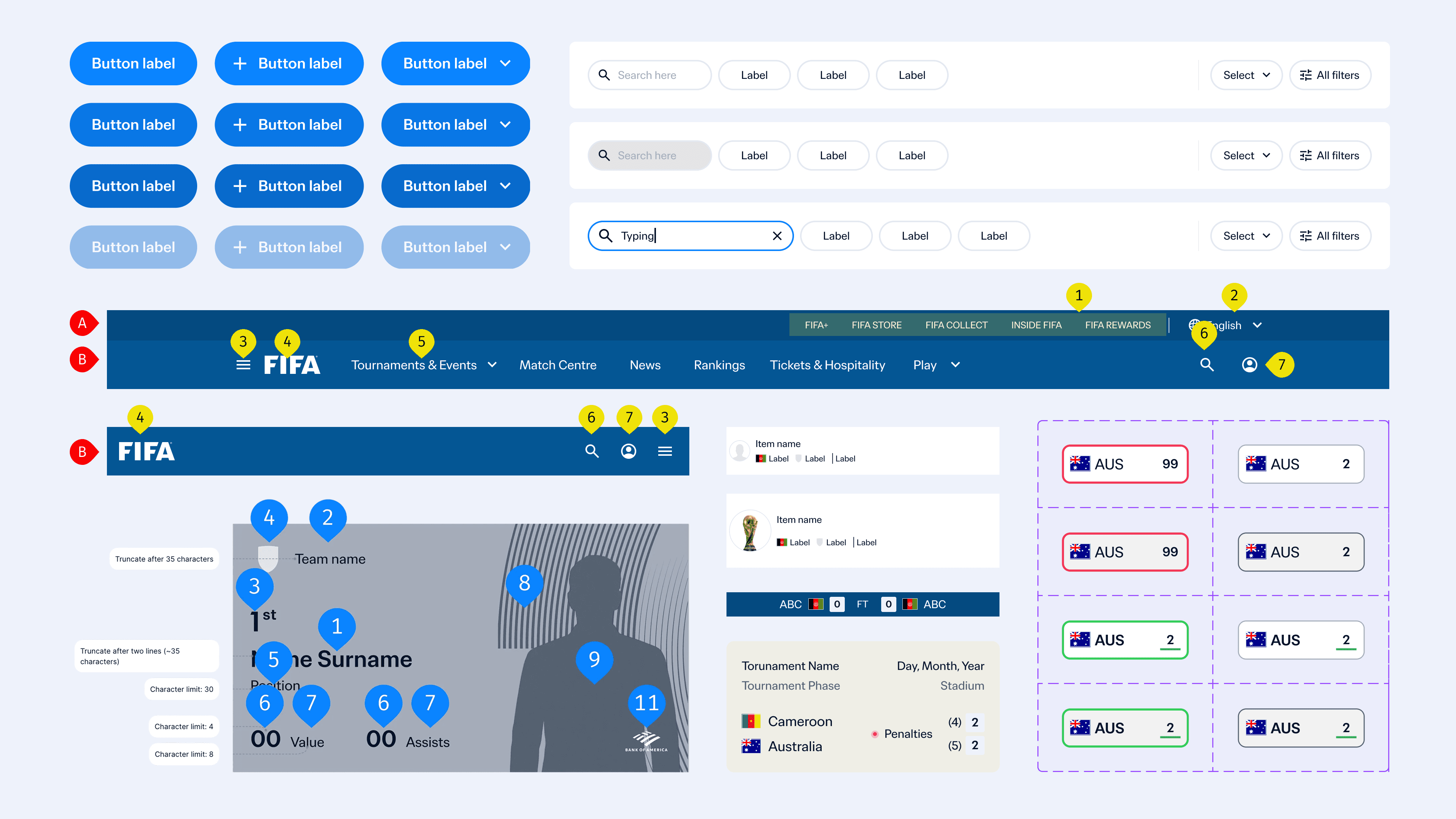
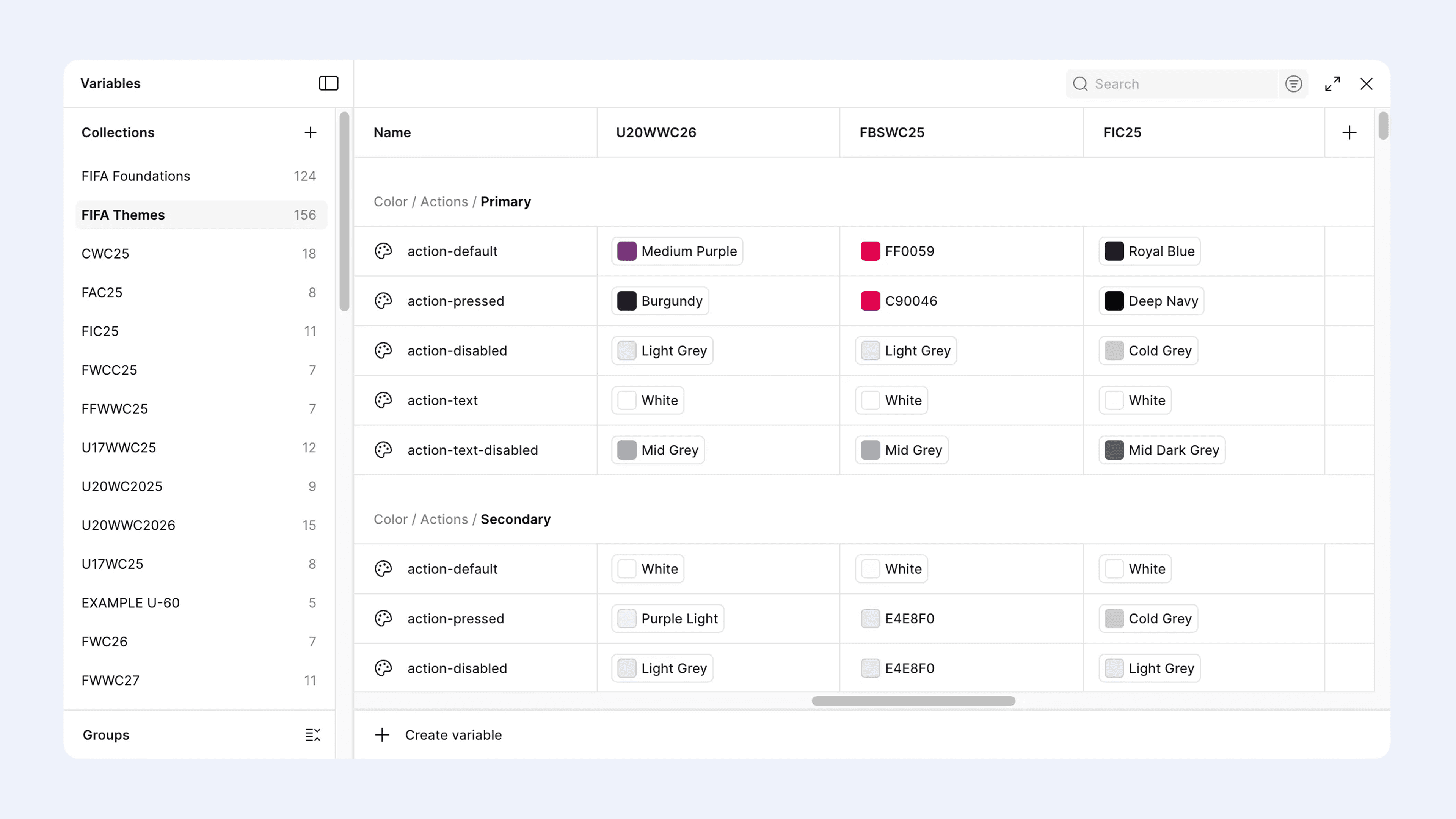
In parallel, I contribute to experience and concept design, exploring how users discover and follow tournaments, how data and editorial content can dynamically adapt to context, and how future events such as the Club World Cup 2025 and the FIFA World Cup 2026 can be supported through flexible, reusable patterns.
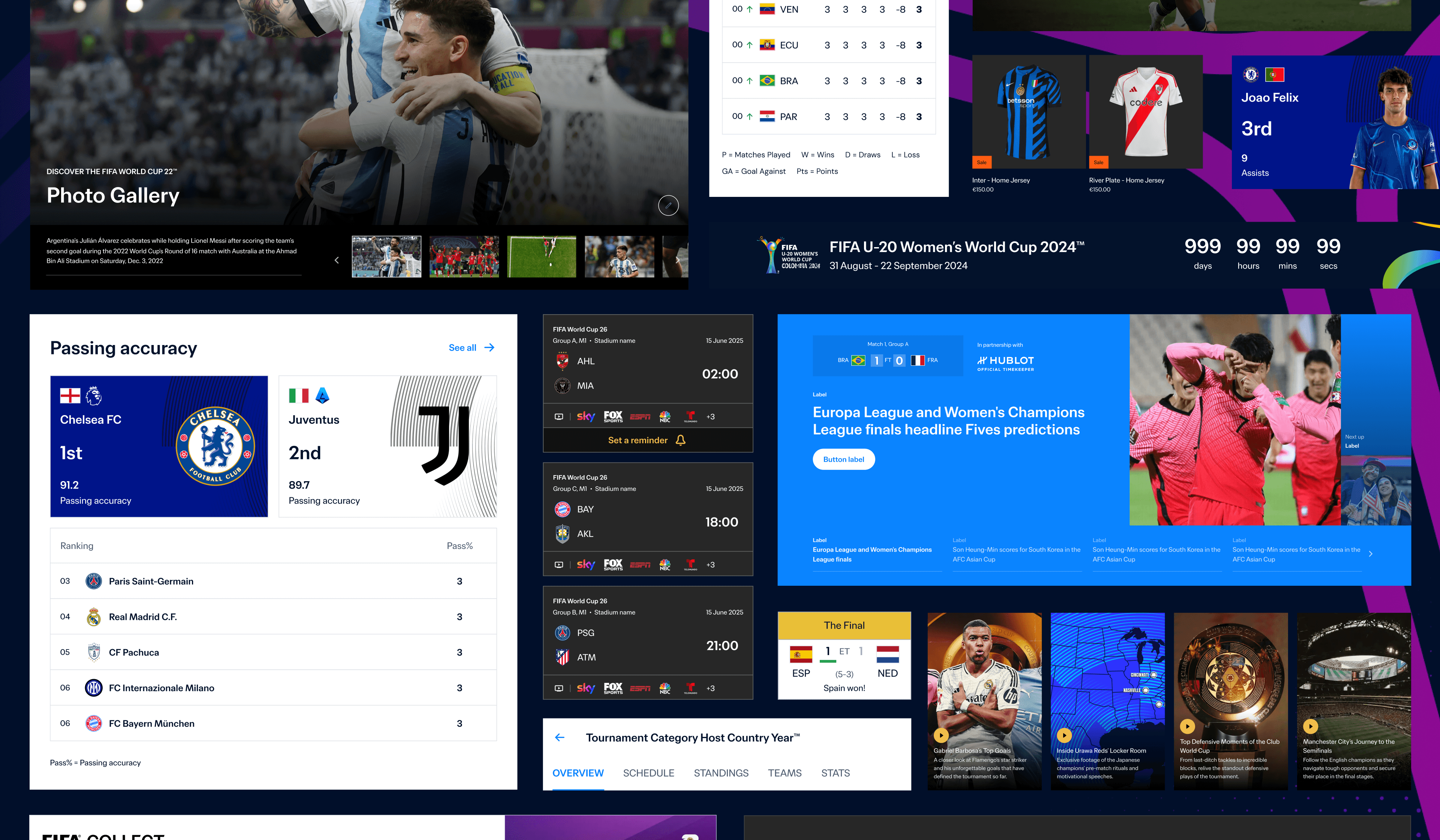
A key part of the work is the ongoing evolution of the design system, where I help define component hierarchies, interaction models, and visual themes to ensure consistency, flexibility, and editorial readiness across the platform.
The process is highly collaborative, involving close alignment with product, engineering, editorial, and commercial teams.
RESULTS
The ongoing work on FIFA.com has contributed to a robust and modular design system supporting global, multi-language experiences, and to a set of scalable UX patterns capable of handling complex data, content, and edge cases.
The combination of vision-led exploration and product-driven execution has helped create stronger consistency between editorial, product, and commercial surfaces, while laying solid foundations for future tournaments and long-term platform evolution.
This project represents my strongest experience in designing large-scale digital products, where UX complexity, system thinking, and real-world constraints come together.